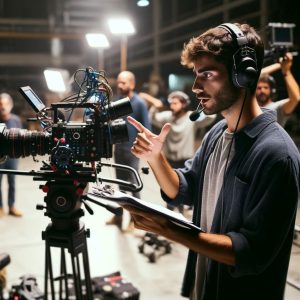
Digital content consumption has grown exponentially in recent years, making video the undisputed king of the internet, social media, and corporate advertising. In this hyper-connected world, a versatile and essential professional role has emerged for brands, events, and content creators. But, in practical terms, what is a videographer, and why has their profile become so sought after in today’s market?
Unlike traditional large-scale film productions, where teams are highly specialized and number in the dozens, the videographer embodies absolute technical and creative versatility. This professional is responsible for leading an audiovisual project from beginning to end, taking control of virtually every phase of the process.
Main functions and skills of this professional
To accurately understand the profile and know what a videographer is, we must analyze the multiple facets that he or she masters during his or her workday:
- Pre-production and conceptualization: Define the idea together with the client, develop the technical script, the basic storyboard and plan the lighting and location needs.
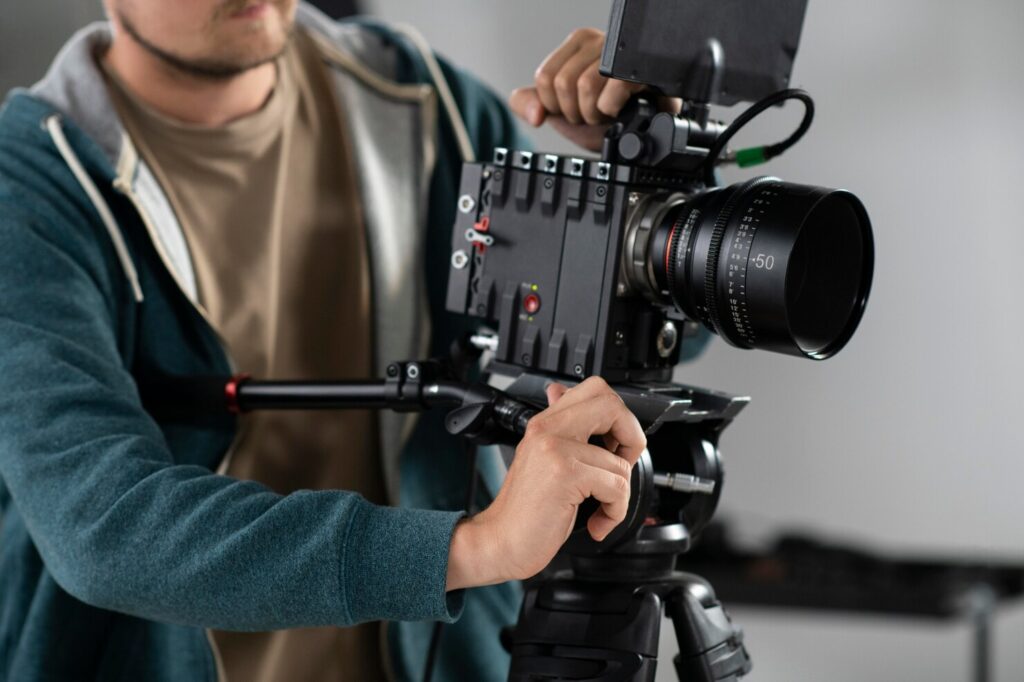
- Camera operation and cinematography: Master the handling of digital or mirrorless cinema cameras, lens selection, framing composition, and lighting control on set.
- Audio capture and design: Ensures that sound is recorded clearly, using lapel microphones, shotgun microphones or external recorders, understanding that mediocre audio ruins any visual piece.
- Editing and post-production: Edit the raw footage, perform color grading, add visual effects or transitions, design the soundtrack, and export the file in the appropriate formats for each platform.
Key differences between a videographer, a filmmaker, and a camera operator
It is very common for these terms to be confused in everyday vocabulary, but in the professional environment of modern audiovisual production there are very clear boundaries based on the scale and methodology of the project.
While a camera operator is limited to executing a director’s technical instructions on a set, and a filmmaker coordinates a massive array of departments (art, wardrobe, sound, photography) for feature films or short films, the videographer stands out for their autonomy. They work in very small teams or completely independently (one-man band). This operational agility allows them to adapt to dynamic environments such as high-end weddings, corporate videos, institutional documentaries, or daily content for digital platforms.
The value of the videographer in the era of digital content
The influence of this figure on modern production is undeniable. Brands no longer seek traditional television commercials with exorbitant budgets that take months to produce; they need immediacy, closeness, and a visual narrative that connects emotionally with their audience in a matter of seconds.
The videographer brings precisely that interpretive freshness. Thanks to their mastery of lightweight yet high-quality equipment, they are able to capture authentic, spontaneous, and aesthetically pleasing moments with an agility that traditional filmmaking techniques cannot replicate. Investing in a professional with this strategic and technical vision is the most direct way for any project to stand out in an image-saturated environment.
Write to us if you want to know more.
You can also write to us on WhatsApp